South Africa's payment landscape has changed a lot in the past few years. You've probably heard about PayShap. You've been doing EFTs forever. And somewhere in the mix is RTC (Real Time Clearance), instant payments, and a handful of other terms that all sound similar.
If you run a business, the differences matter. Speed, cost, and confirmation times affect your cash flow. Here's a clear breakdown.
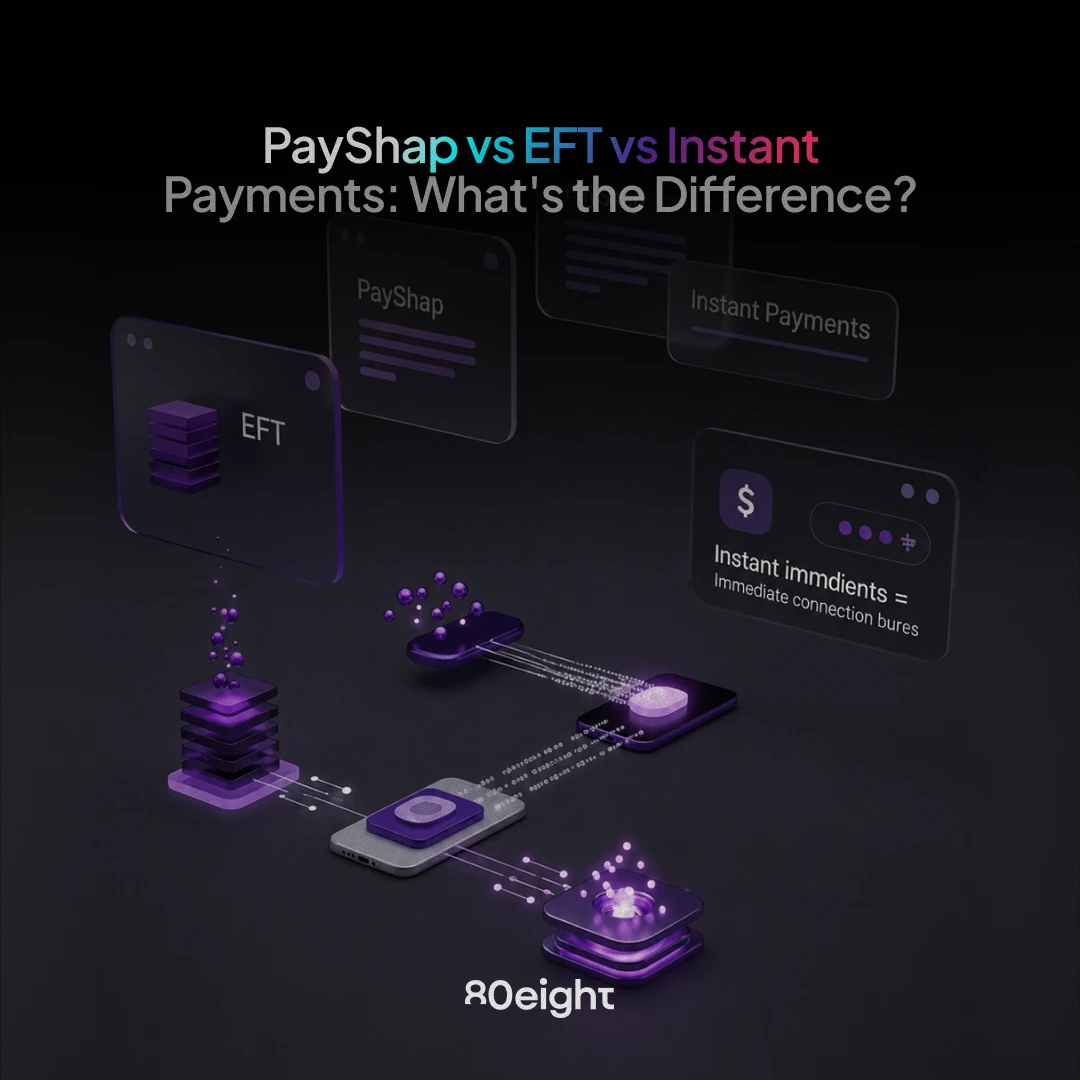
EFT: The Standard
Electronic Funds Transfer (EFT) is the traditional way South Africans move money between bank accounts. You log into your banking app, enter the recipient's account details, and send.
The problem is timing. EFT uses batch processing. Your payment goes into a queue with thousands of others and is processed at set intervals throughout the day. Depending on when you send, it can take hours or until the next business day to clear.
For a business waiting on a supplier payment or a client paying an invoice, this delay has real consequences. It's fine for regular, predictable payments. It's not great when speed matters.
Real Time Clearance (RTC): Fast but Costly
RTC is instant. When you use RTC, the payment leaves your account and arrives in the recipient's account in seconds, not hours.
The trade-off is cost. Banks typically charge a premium for RTC — fees vary by institution and transaction size. Check with your bank for current pricing.
For a business processing dozens of payments a month, this adds up. It's the right tool for time-sensitive payments. It's not cost-effective as your default option.
PayShap: Fast and (Mostly) Free
PayShap is a modern interbank payment system, launched in 2023. It's built on infrastructure designed to make instant payments accessible and affordable.
PayShap fees vary by bank. As at 2025, some banks offer free or low-cost PayShap payments below R3,000 — confirm your bank's current tariff before relying on this for business planning. Payments clear in real time.
PayShap uses a proxy system, meaning you can pay someone using just their phone number instead of their full account details. That reduces the chance of errors.
For many small and medium businesses making payments under R3,000, PayShap may offer a practical combination of speed and low cost — depending on your bank's tariff and operational needs.
88Pay: Instant, Zero-Fee ZAR Payments
88Pay is 80eight's payment feature. It enables instant ZAR payments at zero transaction fees within the 80eight ecosystem, as per current platform terms.
For businesses that regularly pay staff, suppliers, or receive payments from customers, this removes per-transaction fees for payments within the ecosystem, subject to current platform terms.
The trade-off is that both parties need to be on the 80eight platform.
The value proposition is straightforward: zero-fee instant payments within the 80eight ecosystem.
Things to consider when choosing which to use
Day-to-day, non-urgent payments: Standard EFT is fine. Cost-effective for regular transfers where timing doesn't matter.
Time-sensitive payments: RTC or PayShap. For payments above R3,000 where speed matters, RTC may be your only instant option.
Small, frequent payments to individuals: PayShap. Low cost, instant, easy.
Within the 80eight ecosystem: 88Pay. Zero transaction fees, instant. Terms and conditions apply.
The right answer depends on who you're paying, how much, and how quickly. Build a payment workflow that uses the right tool for each type of transaction.
The Bottom Line
South Africa's payment infrastructure is improving. PayShap and modern platforms like 88Pay are bringing instant, low-cost payments closer to the default experience.
For many businesses, understanding the differences between payment methods can help reduce costs and support healthier cash flow.
Understanding the tools available can help you make more informed payment decisions for your business.