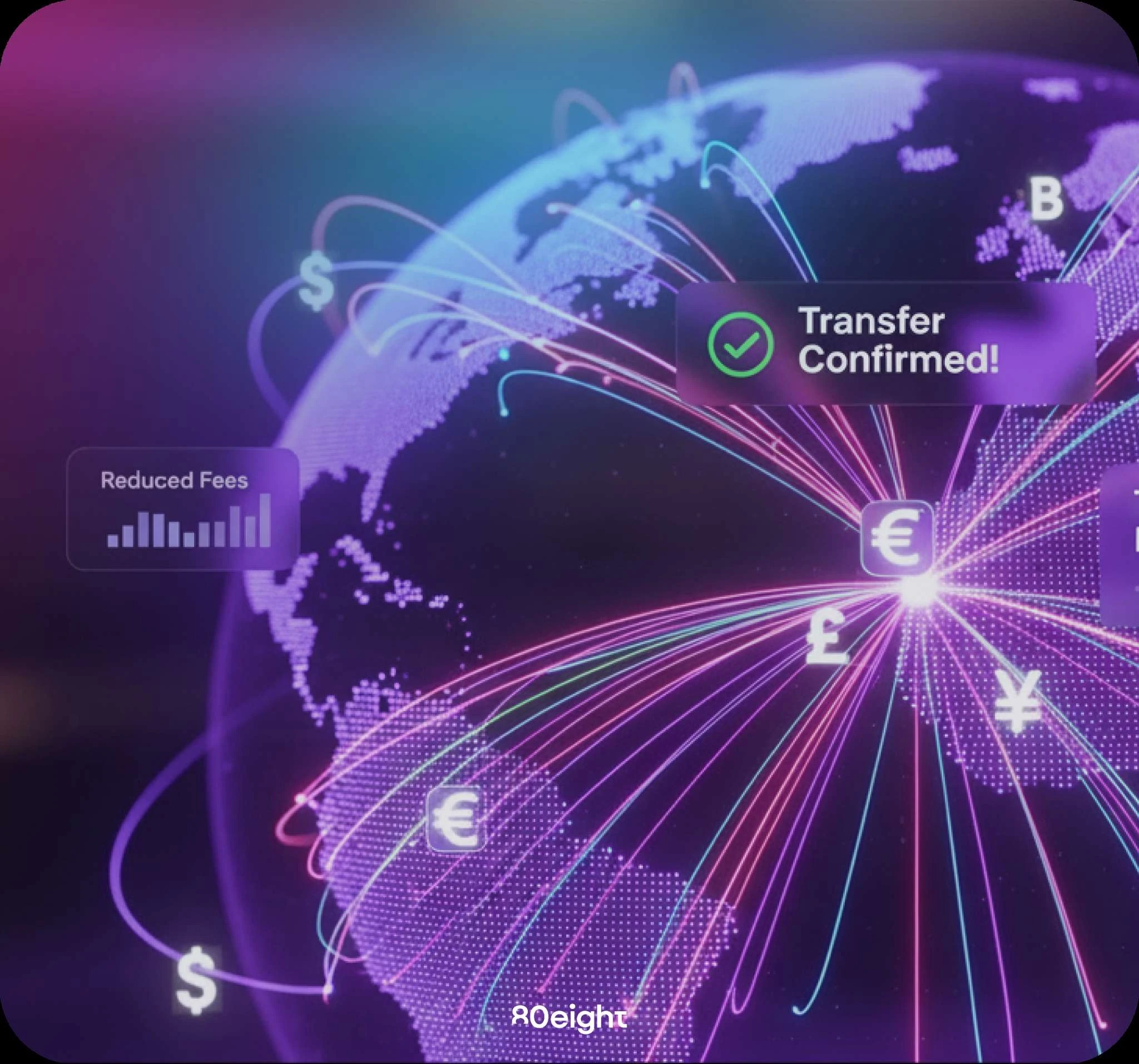
80eight has cancelled SWIFT fees for the next three months. That news has set the cross-border payments sector alight. This is a first for SA – SWIFT fees have been with us since anyone can remember.
What SWIFT fees actually are
SWIFT fees are charges associated with international money transfers sent through the Society for Worldwide Interbank Financial Telecommunication (SWIFT) network. This is like a messaging service used by the banks for transferring money between countries.
SWIFT, the global messaging network connecting over 11,000 financial institutions across 200 countries.
These fees have been with us since anyone can remember. What 80eight has done is revolutionise international payments in SA, not only by eliminating SWIFT fees for three months, but also by slashing typical bank ‘spread’ fees by up to 50% (that’s permanent – not just for three months).
A grudge payment South Africans resent
As Moneyweb recently reported, these SWIFT fees are a grudge payment, and there is growing resentment at the high cost of moving money cross-border. In this age of digital transfers, why are we still paying R500–R1,000 for what is an automated transfer?
And why are the banks hiding the real cost of moving money internationally with a 2–5% spread?
“SWIFT fees are a grudge payment that South Africans resent,” says Faadil Moti, CEO of 80eight. “We’ve decided to eliminate these for the next three months, on top of cutting typical cross-border spread fees by 50%.”
Where the banks really make their money
The spread fees – often as high as 3% of the transaction value – are where the banks make most of their forex profits.
What this saves an importer
This is huge news for individuals and companies transferring funds internationally. If you’re an importer about to place a R1 million import order, this saving will put more than R20,000 back into your bank account. In high-volume, low-margin businesses, this can be the difference between profit and loss.
If you’re an individual planning an overseas holiday, investing abroad or sending your children to an overseas college, the savings can be even more substantial.
“Put us to the test. If you are sending money abroad, you should be shopping around, so give us a try and see how we can offer more competitive rates than traditional providers,” says Moti.
“I think most South Africans will be shocked by how much they can save with us.”
80eight operates as a licensed Treasury Outsourced Company (TOC) and an authorised financial services provider (FSP 49010) in South Africa, with regulated operations globally. This ensures compliance and transparency for all clients. Beyond payments, 80eight’s ecosystem includes crypto trading, investment tools, wallet infrastructure, and lending for SMEs – all accessible through the 80eight app.
Brought to you by 80eight.