What is a digital wallet and how does it work? A plain-language guide to digital wallets in South Africa, what they do, and which type suits you.
You've probably heard the term 'digital wallet' thrown around. Maybe you've used Apple Pay or Google Pay without really thinking about what it is. Or maybe you've seen apps that let people hold crypto and aren't sure how they fit in. Digital wallets are one of those things that sound more complicated than they are. Here's a clear explanation of what they are, how they work, and why they matter.
What Is a Digital Wallet?
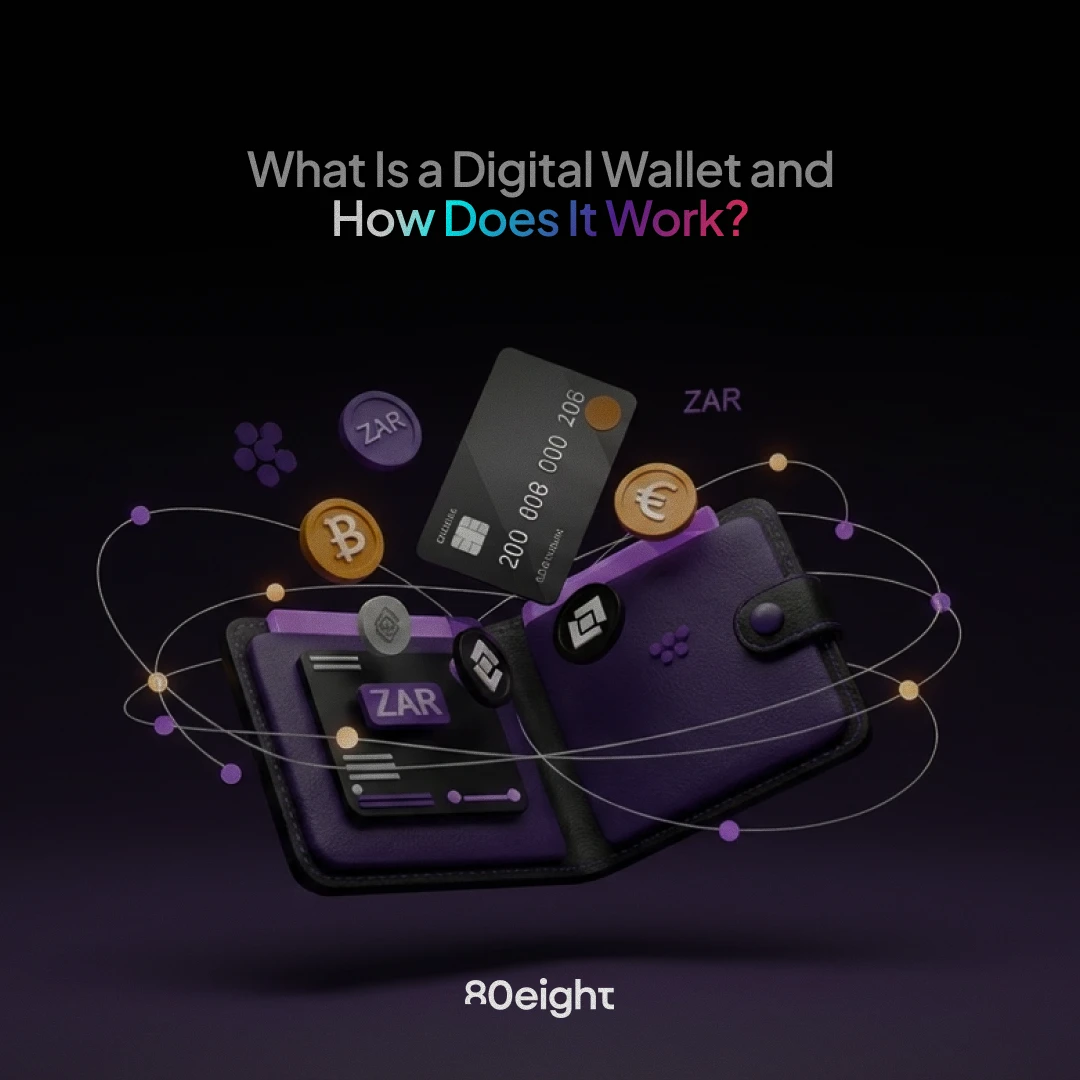
A digital wallet is software that stores and manages value electronically. It can hold money, payment card information, crypto assets, or a combination of all three. Unlike a physical wallet, a digital wallet doesn't store physical cash. It stores either the credentials to access your money (like a card tokenised for tap-to-pay) or the actual digital assets themselves (like Bitcoin or USD Coin (USDC)). The goal is the same as a physical wallet: give you access to your money when you need it. The difference is that a digital wallet can do things a physical one never could, hold multiple currencies, send money globally, and operate without a bank as the middleman.
The Main Types of Digital Wallets
Payment wallets: These link to your bank account or card and let you pay with your phone. Apple Pay, Google Pay, Samsung Pay. Fast, convenient, but they don't store money themselves. Mobile money wallets: More common in markets with limited banking infrastructure. M-Pesa in Kenya is the classic example. Less relevant in South Africa where bank accounts are more prevalent. Neobank wallets: Full accounts, not just payment tools. TymeBank, Bank Zero, Discovery Bank. You hold South African Rand (ZAR), make transfers, and manage your account entirely via an app. Crypto and multi-currency wallets: Store crypto assets (Bitcoin, Ethereum, USDC) alongside or instead of traditional currency. Some, like 80eight, combine fiat (ZAR) and crypto in one place.
How Does a Digital Wallet Work?
The mechanics depend on the wallet type, but the basics are consistent: You create an account and verify your identity. This process is called Know Your Customer (KYC) verification and is required for regulated wallets to comply with South African financial laws. You add funds. For fiat wallets, this means linking a bank account or depositing via Electronic Funds Transfer (EFT). For crypto wallets, it means buying crypto or receiving it from another wallet address. You can send, receive, and store value. Transactions are processed either through traditional payment networks (for ZAR) or blockchain networks (for crypto). Your balance is accessible via the app at any time.
Is a Digital Wallet Safe?
It depends on the wallet and how you use it. For regulated wallets, the Financial Sector Conduct Authority (FSCA) requires registered providers to meet conduct and compliance standards. FSCA registration means the provider is subject to regulatory oversight, it does not guarantee the safety of funds or constitute depositor insurance, but it does mean the provider operates within a regulated framework. For crypto wallets, security also depends on how your private keys are managed. Custodial wallets (where the platform holds your keys) are more convenient but require you to trust the platform. Non-custodial wallets (where you hold your keys) give you more control but more responsibility. The most important rule: only use wallets from verified, regulated providers.
Why Use a Digital Wallet Over a Bank Account?
Speed: Payments can be instant. No waiting for EFT to clear overnight. Cost: Many digital wallets offer low-fee or reduced-cost transactions compared to traditional banking. Fee structures vary by platform, always check the terms before transacting. Accessibility: Manage everything from your phone. No branches, no queues. Multi-currency: Hold ZAR and digital assets in one place. Control: See exactly where your money is and where it's going.
A digital wallet doesn't replace your bank account. It works alongside it, giving you more flexibility and speed.
The Bottom Line
A digital wallet is a smarter way to manage and move your money. Whether you want to pay with your phone, hold crypto, or manage multiple currencies, there's a wallet built for your needs. Find one that's regulated, suits your use case, and gives you the control you're looking for.
This content is educational and does not constitute financial advice. Crypto assets carry risk and values can go down as well as up. Always review the current fee schedule and terms of any platform before transacting.