If you've been watching the USD/ZAR rate for any length of time, you've noticed a pattern. The rand weakens. It recovers a little. Then it weakens again.
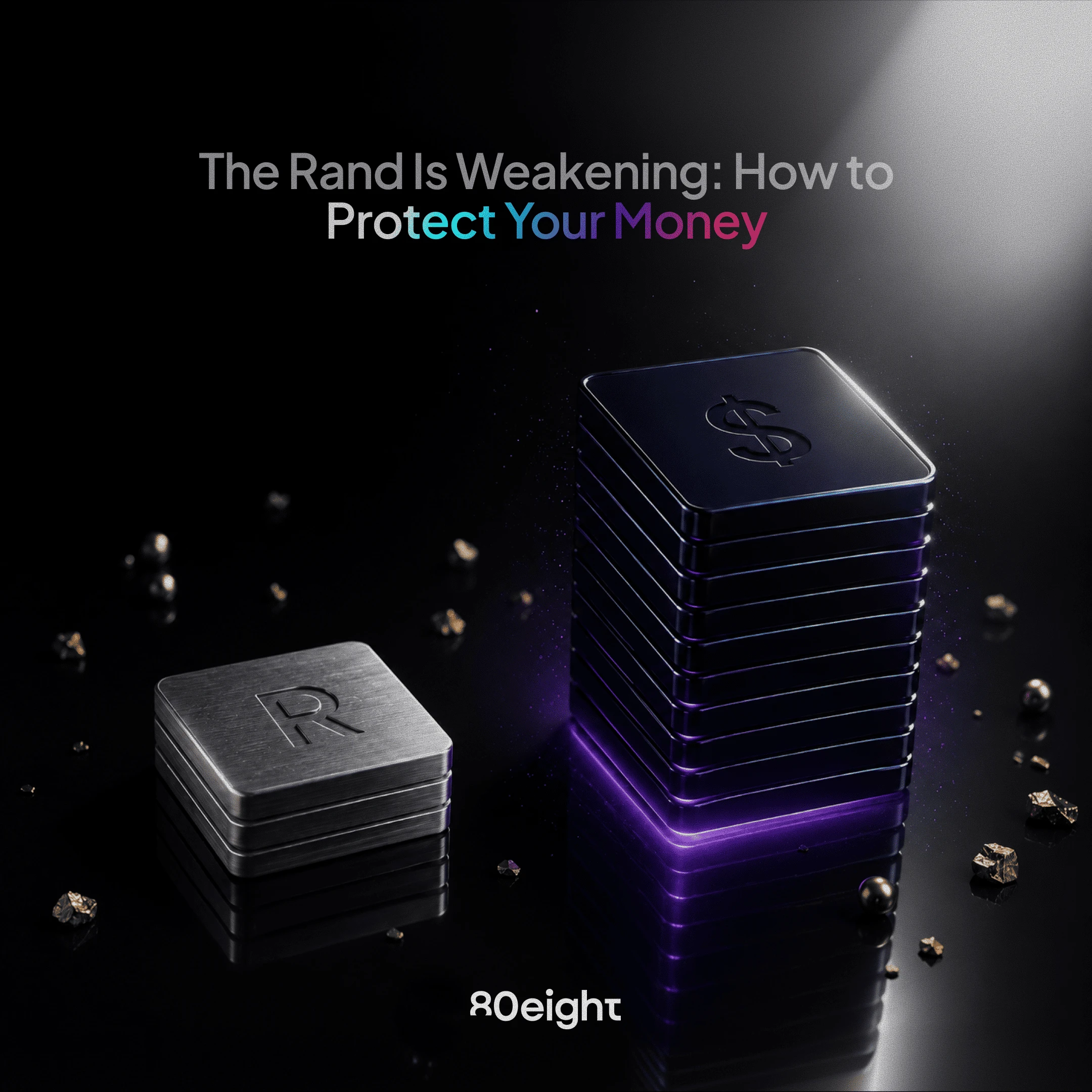
In 2000, the dollar bought around R6. In 2025, it buys over R17. That's what currency depreciation does to your savings over time if you hold everything in rands.
This isn't a doomsday guide. It's a practical look at what you can do about it.
Why Does the Rand Weaken?
The rand is an emerging market currency. It's sensitive to global risk appetite, commodity prices (particularly gold and platinum), South Africa's economic performance, political developments, and US monetary policy.
When global investors move out of emerging market assets (risk-off), the rand typically falls. When South Africa's economic outlook darkens, the rand falls. When the US raises interest rates, global capital flows towards the dollar and away from assets like the rand.
This doesn't mean the rand is broken. It means it's volatile and has a long-term depreciation trend against major currencies. Understanding that is the starting point.
How to Think About Currency Protection
The goal isn't to move all your money out of ZAR. It's to diversify your exposure so that rand depreciation doesn't erode all your savings.
Think of it like this: if 100% of your savings are in ZAR and the rand weakens 15%, you've effectively lost 15% of your purchasing power for anything priced in dollars (which includes a lot: electronics, travel, imports).
Holding some savings in USD-denominated assets reduces that exposure. You're not betting against the rand. You're balancing your risk.
Practical Tools for SA Savers
USDC (a USD-pegged digital dollar, also called a stablecoin — its value tracks the US dollar 1:1): Convert a portion of your savings to USDC. It tracks the dollar. If the rand weakens, your USDC is worth more ZAR when you convert back. 80Eight's wallet lets you hold USDC alongside your ZAR.
Bitcoin: A longer-term, higher-risk option. Bitcoin has historically outperformed most traditional asset classes over 4-year+ periods — though past performance is not indicative of future results, and Bitcoin remains highly volatile. It's not a savings substitute. It's a speculative allocation.
Offshore investment products: Unit trusts and ETFs that give you offshore exposure in rand. Regulated by the FSCA. Works well for larger savings pools.
Foreign currency accounts: Some SA banks offer these. Let you hold USD directly. Useful for frequent international transactions.
What Not to Do
Don't panic-sell all your ZAR assets. Currency markets are unpredictable in the short term. The rand has surprised people in both directions.
Don't put all your savings into any single asset. Diversification is the point.
Don't chase yield without understanding risk. High-yield offshore products that promise guaranteed returns should be treated with scepticism.
Don't ignore the long-term picture. Over time, currency depreciation has eroded the purchasing power of ZAR-only savings for many South Africans — particularly for goods and services priced in dollars.
The Bottom Line
Protecting your money from rand depreciation doesn't require moving to Australia or stuffing dollars under a mattress. It requires a deliberate, diversified approach.
Some savers choose to start with a small allocation and build USD exposure gradually, while keeping the bulk of day-to-day funds in ZAR. The right approach depends on your circumstances, financial goals, and risk appetite. This article is for general information only and does not constitute financial advice — speak to a qualified financial adviser if you need guidance specific to your situation.