The SA Reserve Bank raised interest rates in May by 25 basis points (bps) due to the inflationary effects of the war initiated by the US and Israel against Iran.
The world is paying for it
The world is now bearing the cost of this war. Look at the table below for a sampling of interest rate effects created by this war around the world. It is obvious that the developing world is bearing the brunt.
All this begs the question whether there is any achievable strategic goal here for the US?
It’s beginning to look increasingly desperate for the US.
Farooqui ran the numbers
Hedge fund manager Anusar Farooqui (with a background in military history and a PhD in black hole geometry) has been one of the few to model this war and come to the conclusion that the US is staring at a massive strategic defeat.
Writes Farooqui: “By the end of the first 72 hours, the decapitation path to a US win had closed. If you could takeout Iran’s leadership and shatter its ability to coordinate, you’d have a path to victory. But Iran isn’t a power structure like Saddam’s or Assad’s. It’s not one junta. It’s a deeply institutionalized regime with many centers, and they had spent years hardening it against exactly this kind of strike. So that was gone.
“That left two ways to win. One was coercion: bomb the enemy into submission, destroy his will to fight. That’s the original fantasy of air power, and it has never worked, not once. Robert Pape documented at length that no coercion campaign has ever succeeded this way. The defense establishment knew the history perfectly well. What they were claiming was that precision strike is now so good, we can see and track everything, that maybe it works this time. That’s protecting a failed hypothesis. In reality, there was no possibility of air coercion yielding capitulation.”
The third path to US victory was using the air force to destroy Iran’s ability to field and supply its forces. That meant destroying Iran’s ability make and launch drones and missiles faster than it could rebuild them.
“When I ran the numbers, the rates required for the US to prevail were not plausible. Not even close. I was able to make a high-confidence call very early, and I may have been the only analyst who flipped to ‘we lose’ who hadn’t already believed it going in,” says Farooqui.
Why spending more does not decide it
There’s no question the US can out-spend Iran, but there’s not the decisive issue here. Iran’s drones are technically loitering munitions, not reusable drones. TheShahed-136 is a poor man’s cruise missile — an air-breathing weapon, slow,extremely cheap, and extremely effective. They can be made in a basement. Andit’s nearly impossible to find from satellite reconnaissance. You cannot identify where these things are being made. You cannot interdict the process by which Iran generates strike capability. If it had been drones alone, you might pour everything into defense and manage it.
A decisive turning point in the war was Iran’s destruction of US bases in the Gulf and its strikes on more than a dozen radars that power the THAAD, the most exquisite missile-defense systemin the world. These are not soft targets. They are surrounded by Patriot batteries ready to fire at anything coming close.
“If Iran can get a hard kill on that radar, what can it not get a hard kill on? Once you see that, the rest of the counter-force picture falls into place,” adds Farooqui.
“Iran can take a lot of punishment and outlast us,” notes US military strategist Colonel Douglas MacGregor. “We are a replica of the old British Empire.”
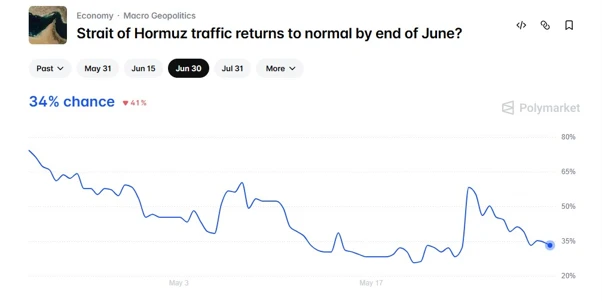
The old ways of fighting these wars no longer work. Iran controls the skies and seas through its missile technology.
Professor Pape argues that Iran’s control of Hormuz has turned it into a global force capable of projecting power from the US to Australia.
How will it end?
How will it end?
The Iranians have put in place the architecture for post-war control of the Gulf. There’s a new transit authority, it’s already on Twitter, and they’ve passed legislation governing Hormuz. They’re in negotiations for joint custody with Oman, and that’s probably going forward because the Saudis have given the green light. The Americans and Israelis are opposed, and that’s part of what’s being haggled over in the negotiations. But the leverage has shifted in a way that is now very difficult to reverse.
The only vagary in all this is whether this ends in a “thin” deal which merely reopens the Strait of Hormuz, or a “thick” deal that ties the hands of both side, with the Iranians cooperating on nuclear enrichment demands and the Americans offering sanctions relief. “The risk of a thin deal is that Iran is likely to get the bomb. The US really does not want that. The problem is that the power of the lobby in Washington makes sanctions relief very challenging. But that’s the price if you want to prevent Iran from getting the bomb.”
Meanwhile the cost of energy is structurally higher, as are interest rates.